Showing posts with label bell peppers. Show all posts

Spice It Up Tzatziki


Tzatziki spices and Feta 


Tzatziki is a traditional Greek dish using thick Greek Yogurt and refreshing cucumbers. There are some variants of this recipe depending on the region of Greece. It is usually served as an accompaniment with gyros, kebabs, or pita bread. I created my own version because that’s what I like to do with recipes that interest me.  Since I love hummus so much, I used spices that I thought would go well with my version of Tzatziki. I served it with grilled Italian meatballs and grilled peppers and onions.  Ottimo we say in Italian!


3 small Persian cucumbers, divided
1 ½ cups full-fat Greek yogurt, strained
1 large clove garlic, mashed and minced
Pinch Sea salt
Black pepper to taste
Red pepper flakes to taste
3 tablespoons extra virgin olive oil, divided
2 tablespoons minced fennel greens (or fresh dill)
1-2 ounces Greek feta, cut in small cubes
Ground coriander for decoration
Ground cumin for decoration
Ground paprika for decoration  

The cucumber: Finely chop 2 cucumbers, no need to remove the skin. Transfer to a sieve, sprinkle with sea salt, and allow to drain about an hour in a bowl.  After an hour push down with a spatula to squeeze out any additional excess liquid.

Note: I used small Persian cucumbers because they have much fewer seeds and are tastier. You can also drink the cucumber juice, no need to throw it away.

The Yogurt: Place the yogurt in a small sieve over another bowl and allow to drain about an hour in the bowl.
Note: I used grass fed full-fat Greek Yogurt, more delicious!
Combine: in a larger bowl, combine the cucumbers, yogurt, minced herb, garlic, a tablespoon of olive oil, tiny pinch of salt, black pepper, red pepper flakes; mix well. Refrigerate for a few hours so the flavors will combine well.
Serve: Transfer the tzatziki to a round bowl, not too deep. Add a few kalamata olive in the center of the dish.  Then thinly slice 1 cucumber and place around the bowl. Add feta pieces on top, and sprinkle the top with paprika, cumin, and coriander. Lastly, adorn with a thread of excellent olive oil to finish the dish. 

Why It's Better to Eat Products in Season


Fruits and Vegetables in Season

Today with the arrival of modern greenhouses and new shipping means, nearly all fruits and vegetables can be eaten year-round. However, once on our table, the taste of fresh vegetables or fruit cannot compare to the ones that have been refrigerated in compartments for weeks or even months.  By being exposed to natural light, rather than artificial cold, the vegetables contain their antioxidants that come from the sun and bring their many benefits to our entire body.  Changing the foods on our table according to the seasons also means diversifying in the intake of vitamins, minerals and other nutrients that our body needs, especially if we choose organic products.

 If we want to experience the heart and soul of what makes food divine, we have to eat what’s in season. This is a deeply ingrained value that I inherited. Mediterranean cooking is considered a sustainable regimen that respects the environment and its cultural traditions. The secret lies in its local, and, most importantly, seasonal ingredients. Eating seasonally means you’re eating fresh ingredients at the height of their flavor. This experience impacts the desire to go back to jarred food or deep frozen ingredients that may have been preserved for months or years.  If you eat the right ingredients in the right months, you will experience the very best of a cuisine.  What better way to experience one of the world’s greatest cuisines than to approach it with the care and respect that it deserves?

Important aspects to understand related to fruits and vegetables in season:


Taste and Aroma: Choosing fresh products that are harvested according to their natural maturation are remarkable assets to our palates. Freshly ripened fruits and vegetables have an unparalleled flavor, have their own characteristic aroma, and are much more colorful. Out-of-season products leave a lot to be desired with regard to quality and taste. It is preferable to follow the natural cycle of fruits and vegetables.

Environmental Choice: Include fruits and vegetables that are environmentally friendly. The growing of fruit and vegetables out of season increases the pollution on our planet. The increased pollution is due to the industrial process which involves the use of artificial energy, often coming from fossils fuels, to heat and keep greenhouses lighted. In addition, products out of season are often imported from other states or countries, whereby even transport methods can produce pollution.

Nutrition: Seasonal fruits and vegetables are more nutritious. They follow their natural cycle so they are richer in essential elements for the well-being of our body. Fruits and vegetables need the ability to grow on their vine as nature intended. This means they will contain larger amounts of vitamins and minerals which is essential for health.  Purchasing directly from local or nearby merchants is an advantage to us, because purchases are made at zero or short distances, yielding reduced usage of transportation.

Reduction of pesticides:  Products grown in season and organic will have much lower quantities of pesticides. The vegetables and fruits that are forced to grow, not according to their natural cycle, appear weaker and therefore are more vulnerable to insects.

Lower Price: Non-seasonal fruits and vegetables cost more because they are imported and transported for long distances which carry an increased cost to consumers.


To Stuff or Not to Stuff My Turkey?


How do I safely thaw a turkey?
Buy a fresh turkey if possible.

If bought frozen, place in a pan and leave turkey in its original wrapper in the refrigerator.  For a 5 pounds turkey, it will take about 24 hours to thaw in the refrigerator.  For a 10 pounds turkey, allow 48 hours to thaw in refrigerator.

Don’t forget to remove neck and giblets after thawing. 

Baked Turkey

To stuff or not to stuff?
For ideal food safety, cook the turkey and stuffing individually.

If you decide to stuff the turkey, best and safer to not pack it tightly with the stuffing, stuff it loosely. Or use fresh herbs as stuffing.

Always use a meat thermometer to check the stuffing temperature as well as the turkey temperature, which both should be at a minimum of 165F degree.  


Fresh herbs
How do I cook the turkey?
Preheat the oven according to turkey package directions. Cooking time will depend on size of turkey and whether it is stuff or not. 

Stuffed turkeys will usually take about 30-45 minutes longer for safe cooking.  A meat thermometer is the best tool you can use to determine when it is properly cooked.

Avoid basting too often if you want a crispy skin. Once every hour should do it.

For additional flavor and moisture, place some aromatic butter under the turkey’s skin.

Bake in the oven on the lowest rack in a preheated oven.


My favorite fresh, no bread stuffing:
lemon slices and fresh thyme, orange slices and fresh rosemary, fresh garlic cloves and rosemary, Apple slices and Sage, fresh garlic cloves and tomatoes, just plain diced carrots and celery and thyme, fresh yellow bell pepper slices and green olives.  This list could be longer…

Fresh Thyme


Delicious Lemons

What’s your favorite stuffing? Send me an email and tell me about your family’s favorite fresh stuffing.

Chicken Apple Salad & Fruit and Cheese Plate

Fruit and Cheese Salad

 
Don’t have time to prepare a healthful meal?

When this happens to me, I surfed my frig and pantry to see what I can come up with. 

I decided to take the fruit and cheese from the frig and created a fruit and cheese platter.  I simply added a thread of olive oil on the mozzarella cheese and placed fruit around it on a plate. It took only a few minutes to assemble this recipe.

Chicken and Apple Salad

I purchase a rotisserie chicken every week and make many dishes without having to take the time to bake the chicken myself.  I decided to make Chicken salad, so I  cut up the rotisserie chicken into small cubes and I added toasted pecans, 1 apple with skin removed and cubed, shredded carrots and broccoli from a bag, a handful of golden raisins, and 2 spring onions. I took some mayo from the frig, added some freshly squeezed lemon juice and paprika and mixed it well with the chicken salad.  I placed the chicken salad over a bed of baby arugula, and frisée lettuce. I added some sliced cucumbers, baby yellow peppers, tomatoes, grain salad on each corner of the plate. For the salad dressing, I simply poured a few treads of unfiltered extra virgin olive oil and threads of pear flavored balsamic vinegar of the greens.  The chicken salad recipe took about 10 minutes to make from ingredients I already had in my frig and pantry.
Rotisserie Chicken Salad

I love it when I can come up with tasty dishes that do not require much time at all and are also healthful to eat. 

Tunisian Grilled Pepper and Onion Salad (Meshwia)


3 large sweet peppers, green, red and yellow
1 large sweet onion
2 large tomatoes
3 cloves garlic
juice 1 lemon
2 tablespoons extra virgin olive oil

2 tablespoons finely chopped Italian parsley
1/2 teaspoon red pepper flakes
kosher salt
Freshly ground pepper
1 teaspoon ground cumin
1 teaspoon ground coriander

Directions:
Place the peppers on a hot grill with the unpeeled onion, tomatoes, and garlic cloves. Grill until charred. Place into a plastic bag until cool. When cool, remove the skin and seeds from the vegetables and slice finely. Finely mince the garlic.

Place in a salad bowl and add the juice of a whole lemon, olive oil, parsley,   Season with red pepper flakes, salt and pepper, cumin and coriander.  Serve at room temperature or cold.  Serves 4-6.

This salad can be served cold with kebab or any barbecue meat or fish.

In Tunisia, this salad is served with canned tuna, hard boiled eggs and even capers on top. For a spicier version, add a little harissa sauce.

Roasted Peppers with Breadcrumbs and Basil


2-3 tablespoons olive oil
6 bell peppers (red, orange, yellow)
3 cloves garlic, thinly sliced
1 cup Italian breadcrumbs
¼ cup capers
2-3 tablespoons white wine vinegar
Kosher Salt and freshly ground pepper

Fresh basil


Directions:
Either grill the peppers whole and remove the skin and then slice, or slice the peppers into strips and fry in a large skillet with olive oil. Sauté the pepper strips over medium heat until the slices are soft and tender. Turn occasionally.

Add the garlic and saute for a minute.  Add the capers and vinegar and saute for another minute. Add the breadcrumbs, season and incorporate well.  Remove from heat and add lots of fresh basil.


Here’s a simple recipe that my mom used to make which she called "Peperonata con muddhica". There are some other versions depending in which region of southern Italy or Sicily you live in. Some have olives, some have grated cheese, and some have oregano. In any case, any version makes a delicious appetizer or a great accompaniment with fish or a meat.


Roasted Peppers Onions and Mint Salad

 
12 small sweet yellow bell peppers
12 small sweet red bell peppers
1 large vadalia onion
1 large red onion
2 large clove garlic, minced
Pinch red pepper flakes
Kosher Salt
Freshly ground pepper
¼ teaspoon ground cumin
¼ teaspoon ground coriander
1/3 – 1/2 cup extra virgin olive oil
10-15 mint leaves, roughly torn

Grill the peppers and onions until fully cooked.  Cool and peel.  Slice the onions and peppers in any shape or size you like and place in a bowl.  Next, add the remaining ingredients, mix well and taste for seasoning.  If you like it a little more spicy, add more red pepper flakes.  Serve warm or at room temperature. Serves 4-6


I served this salad at a Moroccan Cooking party this weekend. There wasn't even a drop of oil left on the plate. This dish pairs well with marinated olives and a spicy hummus.

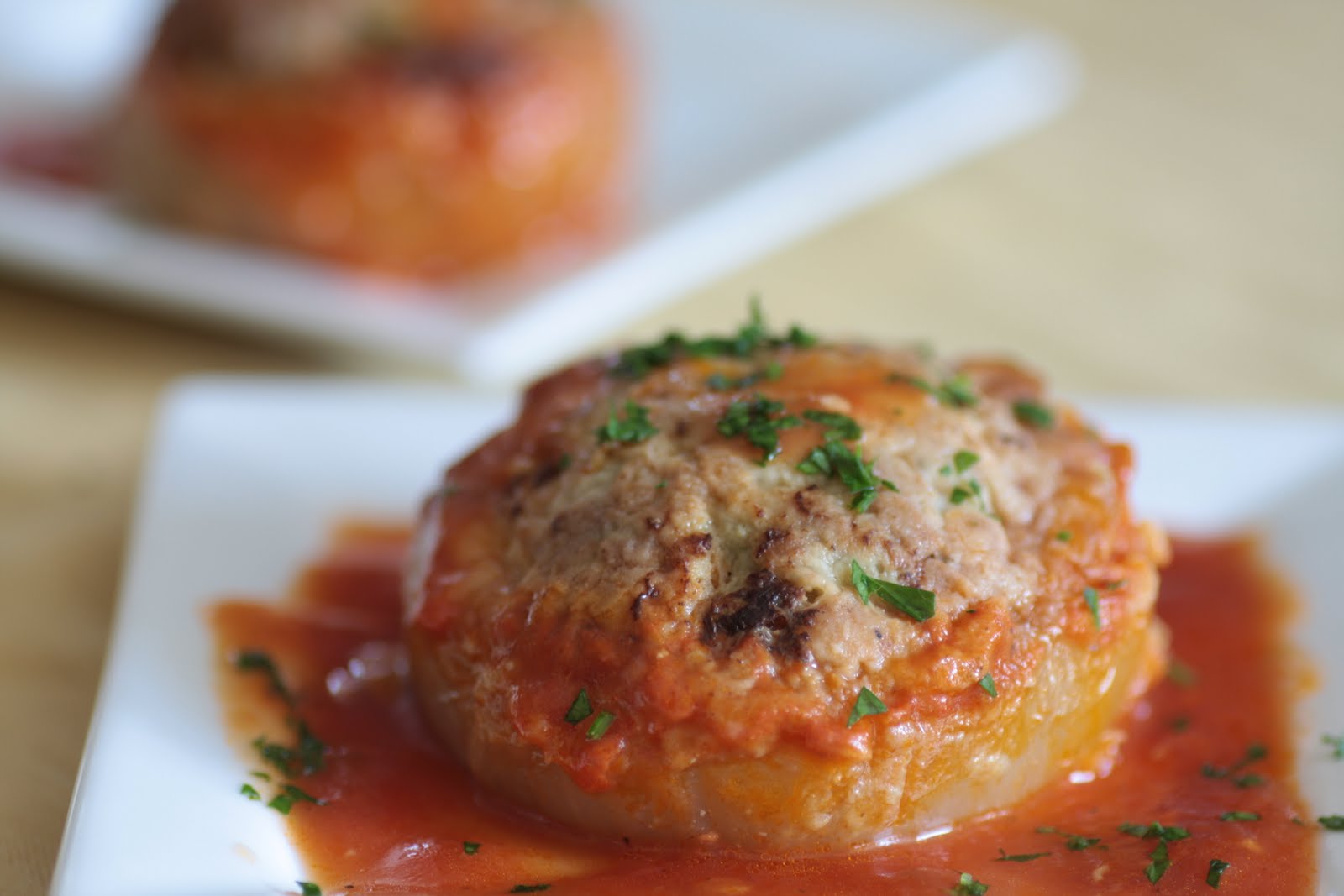
Sicilian Stuffed Tomatoes & Peppers


5 large ripe tomatoes
5 large green, yellow, orange or red bell peppers
½ cup extra virgin olive oil
1 ½ cups cooked rice
1/2 pound ground beef or sausage
1 teaspoon ground cumin
1 teaspoon ground paprika
1 large sweet onion, minced
3 garlic cloves, minced
½ cup fresh basil, minced
1/2 cup fresh Italian parsley, minced
1/2 cup pine nuts or slivered almonds
1/4 -1/2 golden raisins
1/2 cup parmesan
cheese
Salt and fresh black pepper to taste
2 cups chicken or vegetable broth
1/4 cup extra virgin olive oil
2 tablespoons tomato paste


Directions:
1.      Preheat oven to 375F.
2.      Cut off tops of tomatoes and carefully scoop out flesh. Cut off tops of peppers and remove seeds and membrane. Reserve tomato flesh. 
3.      Take tomato flesh and process it until pureed. Place the tomato flesh in a bowl and add olive oil, rice, meat, cumin, paprika, onion, garlic, basil, parsley, nuts, cheese, raisins, salt and pepper. Mix well and stuff the vegetables evenly with this mixture. Place stuffed vegetables in a baking dish.  
4.      Combine broth, and ¼ cup olive oil with the tomato paste and season with salt and pepper.  Pour the sauce over and around the stuffed tomatoes and peppers. 
5.      Bake about 1 hour or until the vegetables pierce easily and the top of the stuffed vegetables are golden on top. When ready, remove from oven and let rest a few minutes before serving.  

With this recipe, you can stuff any vegetable you like, such as onion, eggplant, zucchini, potatoes or cabbage. It goes well with crusty bread and a glass of cool wine.

Maghreb Chackchouka with Poached Eggs

2-3 tbsp. extra virgin olive oil
1 large sweet onion, thinly sliced
1 green pepper, remove seeds, thinly sliced
1 red pepper, remove seeds, thinly sliced
Salt and pepper to taste
2 large cloves garlic, minced
2 plum tomatoes remove seeds, slice lengthwise
2 tbsp. paprika
1 tsp. coriander
¼ tsp. harissa or ½ tsp. red pepper flakes
½ cup broth (chicken or veg.)
4 whole eggs

Directions:
1. Add the oil in a large skillet. Add the sliced onion and pepper strips and sauté on medium-low heat. Season with salt and pepper to taste. Cook until the onions are soft and translucent and the peppers are tender. About 10-12 minutes.

2. Add the minced garlic and cook for about a minute. Add the sliced tomatoes and cook for 2-3 minutes. Next add the paprika, coriander, and harissa or red pepper flakes and stir well. Add the broth and taste for seasoning.

3. While the chakchouka is hot, make 4 indentations in the skillet to make room for the eggs. Place an egg in each indentation and cover the skillet. Cook the eggs covered for 5-10 minutes. Remove the lid and make sure the egg whites are fully cooked. If the eggs are not fully cooked, cover the skillet and allow the eggs to cook a few more minutes. If the eggs are fully cooked, turn off the stove and serve. To serve place an egg on each plate with a nice scoop of the chakchouka. Serve with crusty bread.

This colorful and spicy vegetable dish is a popular breakfast in North Africa, especially in Tunisia. It can be served for lunch, brunch or dinner.